

We often meet people who want to meditate but feel blocked by one thought: “My routine is too full.” We get it. Life moves fast. The alarm rings, messages arrive, tasks pile up, and by the evening the mind is still running. In moments like these, meditation can seem far away. Yet this is exactly when a steady inner practice can help.
Marquesian meditation can fit into daily life when we treat it as a simple act of inner alignment, not as a perfect ritual.
In our experience, the best way to begin is not by changing the whole day. It is by placing small pauses inside the day we already have. A few quiet minutes in the morning. One mindful breath before a meeting. A short check-in before sleep. These steps may look small, but they change the tone of our actions.
Start with a clear intention
Many routines fail because they begin with pressure. We decide that from tomorrow on, we will meditate for thirty minutes every day, sit with perfect posture, and feel calm at once. Then real life happens. The plan breaks. We feel frustrated.
We think a better start is softer and more honest. We ask one question: why do we want this practice in our life right now? Some of us want more emotional balance. Some want less reactivity. Others want a deeper sense of presence.
Start small. Stay true.
When the intention is clear, the routine has meaning. We are no longer copying a habit. We are building one that responds to a real inner need.
Choose one fixed moment
One of the easiest ways to integrate meditation into routines is to connect it to something that already happens every day. We wake up. We drink water. We sit in the car. We turn off the light at night. Existing habits create anchors.
The simplest routine is the one attached to a moment that already exists.
We suggest choosing just one of these time windows:
Right after waking up, before looking at the phone
After lunch, as a reset between parts of the day
At the end of work, to release mental tension
Before sleep, to quiet the mind and body
Years ago, one of us tried to meditate at random times. It sounded flexible, but in practice it meant “later.” Later became never. Once the practice moved to the same chair every morning, even for five minutes, it became real.
Make the practice short at first
A common mistake is doing too much too soon. Meditation grows through repetition, not force. We have seen people build strong consistency with three minutes a day. That may sound modest, but modest can become stable. Stable can become deep.
There is also a wider cultural shift around this habit. Data discussed by analysis of U.S. meditation practice over time shows that the share of adults who practiced meditation more than doubled from 2002 to 2022. A 2024 study on meditation use among U.S. adults also estimated that by 2022, about 60.5 million adults were practicing meditation. We see this as a sign that people are finding practical ways to bring meditation into everyday life, not only into rare quiet moments.
To keep things realistic, we can begin with this pattern:
Sit for 3 minutes during the first week.
Increase to 5 minutes during the second week.
Move to 7 or 10 minutes only when the habit feels natural.
This pace removes pressure. It also gives the mind time to trust the process.
Keep the method simple
When a practice feels complex, we avoid it. That is why we prefer a simple structure that can be repeated without strain. In Marquesian meditation, we can focus on presence, breath, inner observation, and conscious stillness.
We can use a short sequence like this:
Sit in a stable and comfortable position
Close the eyes or soften the gaze
Notice the breath without trying to control it
Observe thoughts, emotions, and body sensations without reacting
Return attention to the breath each time the mind drifts
The goal is not to stop thinking, but to relate to thoughts with more awareness.
This changes everything. Instead of fighting the mind, we witness it. Instead of judging what appears, we allow it to show us what is active inside.
Use transitions during the day
Formal meditation matters, but so do the small spaces between one action and the next. These transitions are often ignored. We rush from bed to kitchen, from screen to call, from task to task. The body moves faster than the mind can process.
We can insert short Marquesian pauses into these transitions. They do not replace the main practice, but they support it.
Useful moments include:
One full breath before opening email
Thirty seconds of stillness after parking the car
A silent check-in before entering the house
Three slow breaths before responding during tension
Research shared by findings on meditators and health behaviors suggests that people who meditate are also more likely to engage in preventive health actions. We think these small pauses help explain part of that pattern. When we become more conscious in simple moments, our choices often change too.
Create a supportive space
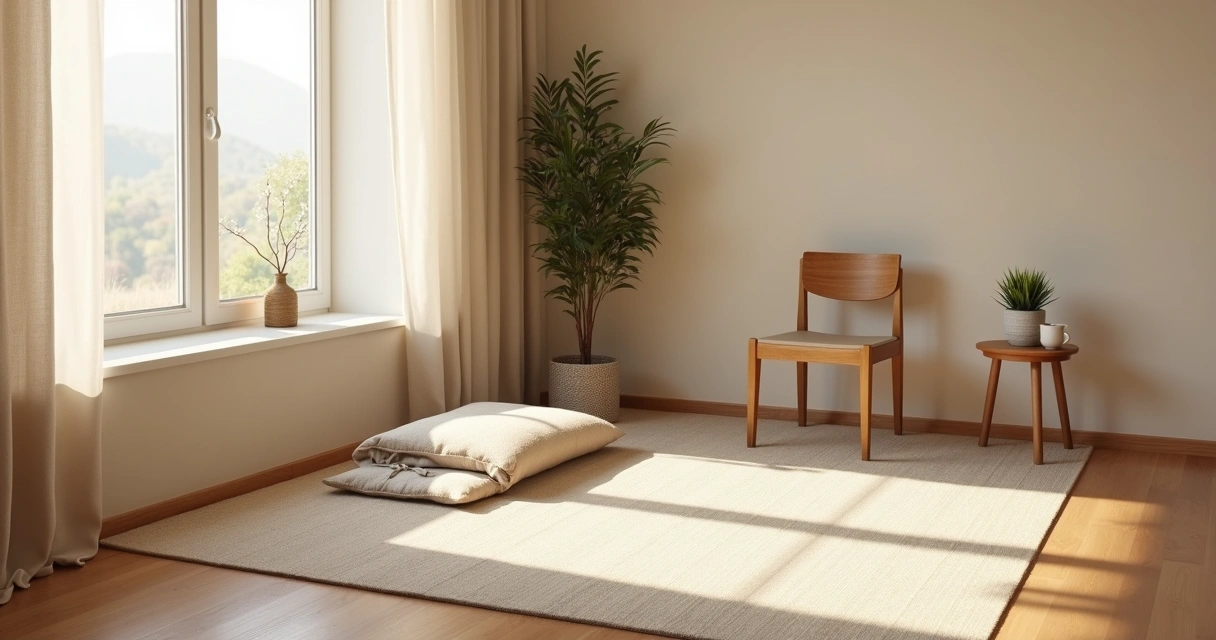
We do not need a special room, expensive items, or a dramatic setup. Still, a small dedicated space helps the mind recognize what is about to happen. It can be one corner of a bedroom, a chair by the window, or a quiet place on the floor.
What matters is not decoration. It is consistency.
A supportive meditation space often includes three simple features:
Low noise or at least fewer interruptions
Comfort without making us sleepy
Visual simplicity that helps the mind settle
We have seen how one cushion left in the same place can become a silent reminder. No app alert needed. The space itself calls us back.

Be patient with resistance
Some days the mind will resist. It will say there is no time, no energy, no point. We know that voice well. It appears in many inner practices. The answer is not harsh discipline. It is steady return.
Consistency grows through return.
If we miss one day, we start again the next. If the session feels restless, we still showed up. If emotions rise, we observe them with honesty. This attitude makes the routine human and sustainable.
Conclusion
To integrate Marquesian meditation into routines, we do not need a perfect schedule or ideal mood. We need a clear intention, one fixed moment, a short practice, and the patience to begin again. Little by little, meditation stops being a separate task and becomes part of how we live, pause, and respond. That is where its depth appears. Quietly. Daily. In real life.
Frequently asked questions
What is Marquesian meditation?
Marquesian meditation is a contemplative practice centered on inner observation, conscious breathing, stillness, and non-reactive awareness. We approach it as a way to notice thoughts, emotions, and inner patterns with more clarity, so daily actions come from greater presence and responsibility.
How do I start Marquesian meditation?
We suggest starting with three simple minutes each day in a quiet place. Sit comfortably, notice your breathing, and observe what arises without trying to control everything. Pick the same time each day so the practice becomes part of your routine.
Can I do Marquesian meditation at home?
Yes, we can practice Marquesian meditation at home very easily. A calm corner, a chair, or a cushion is enough. What helps most is choosing a space where interruptions are less likely and returning to it with regularity.
How long should I meditate each day?
For most people, starting with 3 to 5 minutes a day works well. As the habit becomes stable, we can increase to 10 minutes or more. The best length is the one we can maintain with honesty and calm.
Is Marquesian meditation good for beginners?
Yes, it is well suited for beginners because it can start in a very simple way. We do not need complex steps. We only need a few minutes, a willingness to observe, and the patience to keep returning to the practice.