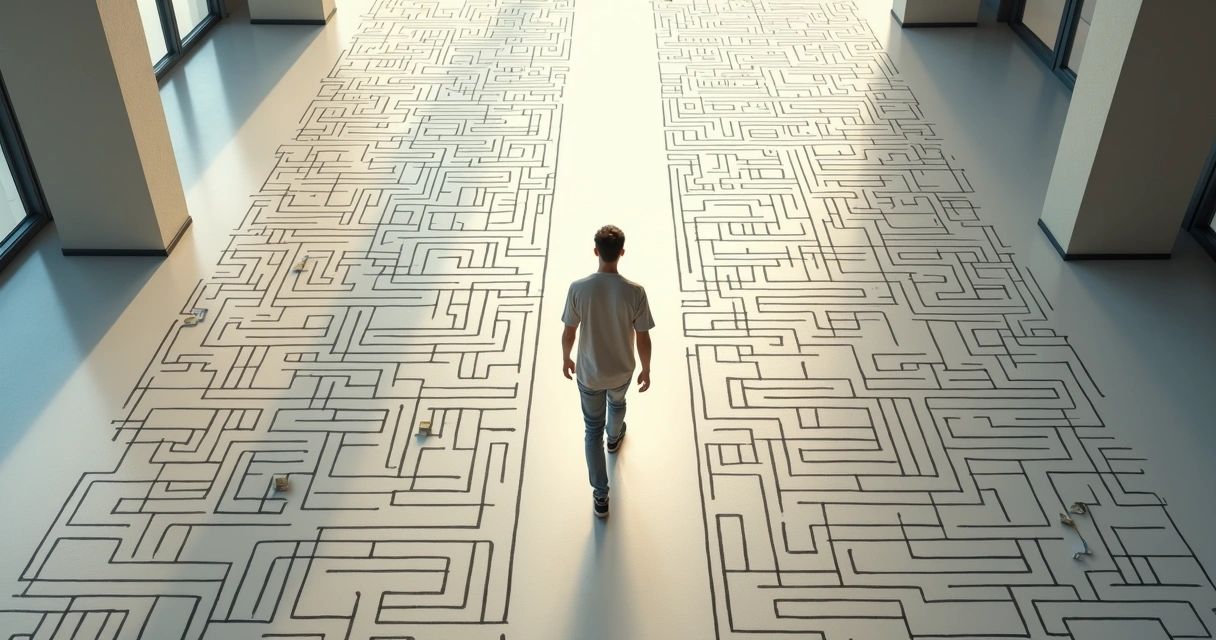

We often think multitasking is a skill. It can look like one. We answer a message while reading an email. We eat while watching a video. We open five tabs, switch between them, and tell ourselves we are keeping up. Yet when multitasking happens without choice, it tells us something deeper about our state of awareness.
Unconscious multitasking is not just doing many things at once. It is moving between tasks without noticing why we moved.
That difference matters. Conscious shifting can be useful in real life. Unconscious shifting often points to inner restlessness, emotional tension, or a mind that has lost contact with the present moment. In our experience, this is where awareness becomes visible. Not in what we say we value, but in how we place attention when nobody is watching.
What our scattered attention is saying
When we multitask without intention, attention stops being guided and starts being pulled. The phone vibrates, a thought appears, a memory interrupts, a tab calls for us. We react. Then we react again. Soon, we are no longer choosing our direction. We are following impulses.
This pattern may look harmless. Sometimes it even feels normal. But normal does not always mean healthy. A mind that cannot remain with one action for a few minutes may be revealing more than habit. It may be showing discomfort with silence, difficulty with emotional presence, or fear of stillness.
Attention reveals consciousness.
We have seen this in simple scenes. Someone sits down to write a short message. In less than three minutes, they check the weather, reply to another chat, glance at a video, and return to the first task with less clarity than before. Nothing dramatic happened. Still, something was exposed. The mind could not stay.
When attention is constantly fragmented, awareness is often fragmented too.
That does not mean we should judge ourselves. It means we can listen. Unconscious multitasking can be read as feedback. It shows where our inner life is unsettled.
Why the mind slips away
There are practical reasons for multitasking. Modern life is full of alerts, screens, deadlines, and overlapping demands. But the outer world is only part of the story. The inner world also drives distraction.
In our view, unconscious multitasking usually grows from a mix of factors:
Low tolerance for pause or boredom.
Anxiety that seeks constant movement.
Emotional avoidance, especially when one task brings discomfort.
A learned habit of rewarding novelty over depth.
We may leave one task not because another one truly matters, but because the first task asks us to face uncertainty, effort, or emptiness. The switch gives brief relief. That relief trains the pattern. Soon, the hand reaches for a new input before the mind even forms a clear reason.
This is why unconscious multitasking says so much about awareness. It shows us what we cannot easily stay with. A difficult paragraph. A quiet meal. A hard feeling. A moment alone.

What research shows about the habit
This pattern is not rare. It is widespread. In fact, an analysis of 3,372 computer session logs from students found that more than 70% of sessions showed multitasking, over 50% showed it often, and about 35% of sessions were only multitasking. Sessions with a single task made up less than 10%.
Those numbers matter because they reflect more than busy schedules. They suggest that split attention has become a default mode for many people. When a pattern becomes automatic, it starts shaping awareness itself. We stop noticing the cost because the cost becomes familiar.
What repeats without reflection becomes part of our mental identity.
That is why unconscious multitasking deserves a closer look. Not with alarm, but with honesty.
The hidden cost to awareness
Many people notice the obvious effects first. They forget what they were doing. They reread the same paragraph. They feel mentally full, yet oddly unsatisfied. But beneath these daily signs is another cost. Awareness becomes shallow.
When we keep switching, experience is no longer fully lived. Conversations become half-heard. Meals are tasted without attention. Work is done, but not inhabited. Rest happens with background noise. Even leisure becomes divided.
This weakens our relationship with ourselves. We do not just lose focus on the outside. We lose contact with our own responses on the inside. We may miss tension in the body, sadness under the surface, or the simple truth that we are tired.
Short tasks start replacing deep contact. Fast reaction replaces observation. The result is not only mental fatigue. It is a thinner form of presence.
How to read your own pattern
We think it helps to stop asking, “Why am I so distracted?” and start asking, “What happens right before I switch?” That question is softer and more useful.
You may notice patterns like these:
You switch tasks when the work becomes unclear.
You reach for your phone when silence appears.
You open new tabs when one task asks for patience.
You add another activity when a feeling begins to rise.
These moments are rich with information. They show where awareness breaks and what triggers that break. We have found that this observation alone can start changing behavior. Once the pattern is seen clearly, it loses some of its force.
Awareness begins when reaction is seen.
A simple practice can help. For one day, notice every time you switch tasks without planning to. Do not correct it at first. Just write down what came before the shift. The goal is not control. The goal is contact.

Can multitasking ever be conscious?
Yes, sometimes. Life includes moments where we must track more than one thing. Caring for a child while cooking is different from checking messages while pretending to listen. Context matters.
The real question is whether we are choosing the split or being driven by it. Conscious multitasking has a purpose, a limit, and a clear return point. Unconscious multitasking is vague. It expands quickly. It keeps going even when it no longer serves anything.
The problem is not always the number of tasks. It is the absence of inner direction.
That is why awareness is the center of the issue. We do not need a rigid life with only one stimulus at a time. We need enough presence to know what we are doing, why we are doing it, and when our attention has been captured.
Conclusion
Unconscious multitasking reveals a great deal about awareness because attention follows the truth of our inner state. If we are tense, we scatter. If we are avoiding something, we drift. If we are grounded, we can choose.
This is not a moral failure. It is a signal. The scattered moment is not proof that we are weak. It is proof that something in us wants to be seen. When we notice that, multitasking stops being just a habit of screens and schedules. It becomes a mirror.
And that mirror can help us return. One breath. One task. One honest moment of presence.
Frequently asked questions
What is unconscious multitasking?
Unconscious multitasking is doing several tasks or switching between them without a clear decision. It often happens on autopilot, driven by habit, discomfort, or distraction rather than real need.
How does unconscious multitasking happen?
It usually happens when attention is pulled by notifications, restless thoughts, boredom, anxiety, or emotional avoidance. The mind moves away from one task and grabs another before we fully notice the shift.
Can unconscious multitasking affect productivity?
Yes. It can slow work, increase mistakes, weaken memory, and make simple tasks feel heavier. Even when we stay busy, constant switching can reduce the quality of attention we bring to what we do.
Is unconscious multitasking always bad?
No. Sometimes quick switching is part of real life. The problem begins when it becomes automatic and constant. If we are no longer choosing when to shift attention, the habit can reduce clarity and presence.
How to improve awareness while multitasking?
We can improve awareness by pausing before switching tasks, turning off nonurgent alerts, naming the task we are doing, and noticing what feeling appears right before distraction. Small moments of observation help bring attention back under choice.