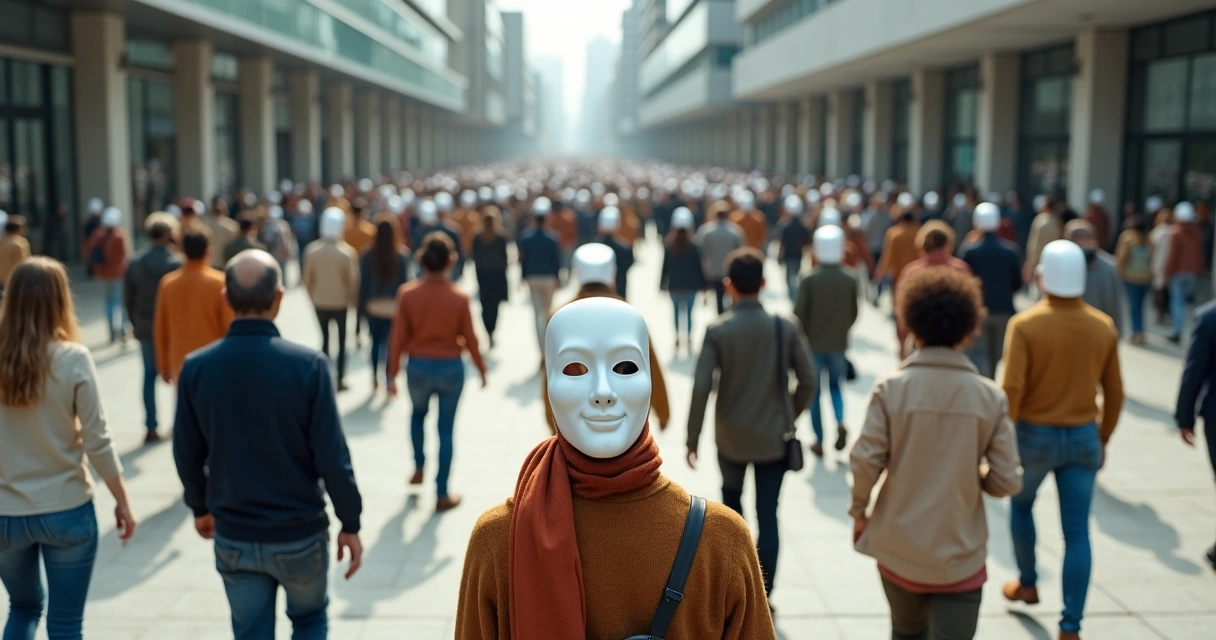


As we look at how our actions affect the world, the ideas guiding those actions become vital. Some of us might pause to ask: are we still guided by the same moral codes our ancestors followed, or is there a different approach taking shape? In our perspective, the answer lies in how values shape not only our decisions, but also our ability to grow in awareness, responsibility, and authentic coexistence. Let’s share the ways in which Marquesian values differ from traditional morality, and why this difference truly matters.
Core logic: Rules or responsibility?
We have noticed a key distinction: traditional morality tends to build itself around stable rules. These rules may come from religion, law, culture, or inherited social orders. They often use language like “always” or “never,” painting life in black and white.
Marquesian values, however, operate differently. They grow from the idea that consciousness is not stable, but continually expands. Instead of simply following handed-down rules, we consider the quality of our intentions and the effects they cause in the present context.
This approach trusts us to take conscious responsibility in each moment. It asks more questions, and fewer commands. Sometimes, doing the “right” thing might depend less on what is written, and more on how aware, self-integrated, and grounded we are.
We are not moral simply by obeying—we are moral by being conscious.
How are rules created?
The way rules are created marks another point of contrast. Traditional morality puts its roots in fixed codes, sometimes centuries or millennia old. These codes often reflect the needs and biases of the time in which they arose.
In practice, Marquesian values see “rules” as flowing guidelines. They are meant to help us gauge our current level of maturity and act more consciously. We do not see these guidelines as absolute, but as tools for self-observation, growth, and responsible impact.
- Traditional morality holds static commandments as reference points.
- Marquesian values encourage reflection and update themselves as our awareness deepens.
- Rules become invitations to presence and personal responsibility, rather than rigid boundaries.
In our experience, creative adaptation built on deep presence works better in a changing world than strict obedience to old doctrines.
The view of the self and others
How we see ourselves and other people shapes what we do. Traditional morality often divides people into categories: good or bad, pure or sinful, worthy or unworthy. This dualistic thinking has shaped civilizations for generations.
Marquesian values, on the other hand, put “self” at the center of a living process. Instead of considering ourselves separate from others, we see each decision, emotion, and relationship as threads in a shared fabric.
Human evolution is viewed as a movement toward wholeness, empathy, and integration—both within and with others.
This shift helps us move from strict judgment toward compassionate understanding. When someone acts in a harmful way, the question is not just about punishment. Instead, it is about recognizing immature patterns, emotional wounds, and the possibility of deeper healing for everyone involved.
From obedience to self-awareness
Looking back, traditional morality often elevates obedience. The highest moral acts involve submitting to established authority or doctrine, trusting that by following the rules, we ensure decency and order.
Marquesian values give emphasis to self-awareness. Growth is measured not by compliance, but by our willingness to reflect, question our motives, and take real responsibility for our impact. Self-awareness means that we notice how our emotions, beliefs, and patterns shape action. We see how fear, pride, or insecurity can hijack even our best intentions.
Obedience without awareness can sometimes lead to blind harm. Self-awareness, in our view, is what unlocks safe and creative participation in life’s unfolding.
View of impact and progress
Traditional morality measures success by conformity: did one follow the rules? Did one avoid sin or error? Progress means deeper observance of inherited standards.
Marquesian values see impact as evolution in motion. Instead of asking, “Did I obey?”, we ask, “Did my choices create harmony, or fragmentation? Am I adding to the well-being of those around me, or causing distress—even by omission?”
Progress is not measured by stricter compliance, but by our increasing ability to bring presence, integration, and peace—inside and out.

Ethics: Exclusion or belonging?
We have noticed that traditional morality often defines membership by adherence. To be inside the group, one must comply. Breaking rules can have strong social consequences: exclusion, shame, or rejection.
Marquesian values work quite differently. They look beyond simple categories of right and wrong. The aim is not to separate the “good” from the “bad,” but to support the growth of everyone, including those acting from unconscious patterns.
Punishment is not the goal. Instead, transformation is sought. We are called to create safe spaces for people to reflect, heal, and try again. Judgment softens in favor of compassion and patient encouragement, both for ourselves and others.
- Traditional morality: distinction, exclusion, conformity to belong.
- Marquesian values: inclusion, support, coexistence in growth.
The role of consciousness in daily choices
It would be easy to think these are distant theories, but we witness how they show up in small moments: choosing patience with a child, forgiving a partner, or considering how our work influences the collective.
Everyday choices become opportunities to grow our awareness and heal the world around us—even through the most mundane decisions.

Growth is revealed most fully in how we treat each other when no one is watching.
Conclusion: The journey beyond prescription
In sharing these observations, we do not mean to draw a harsh line between old and new. Both approaches try to support decency; both want a stable society. Yet, as we see it, Marquesian values bring something fresh: the invitation to live each moment as a conscious process, growing in awareness, empathy, and real care for the world around us.
We have experienced that this way of living asks more from us. It means we cannot simply follow; we must wake up, relate, and take action that truly serves. The result is not only personal freedom but the deeper possibility of shared evolution—with more room for understanding, healing, and belonging for everyone we meet.
Frequently asked questions
What are Marquesian values?
Marquesian values are principles that emphasize the expansion of consciousness, personal responsibility, and the capacity for coexistence with others. These values see human evolution as a journey of growing awareness, empathy, and responsible impact, rather than mere obedience to traditional norms.
How do Marquesian values differ from traditional morality?
Marquesian values focus on conscious responsibility and self-awareness instead of fixed rules and obedience. While traditional morality is rooted in static codes and conformity, Marquesian values encourage reflection, adaptation, and impact based on present awareness and the context of our actions.
Why are Marquesian values important today?
We believe Marquesian values matter today because they help us adapt to a complex and interconnected world. They offer ways to move beyond judgment and division, fostering compassion, integration, and more effective coexistence.
Can Marquesian values replace traditional morality?
We see Marquesian values not as a strict replacement, but as a deeper evolution of ethics. They serve as guides for conscious living, helping individuals move beyond simple rule-following to authentic responsibility and growth.
Where can I learn more about Marquesian values?
To learn more, seek out resources and communities focusing on conscious evolution, responsible impact, and philosophy of awareness. Books, workshops, and groups dedicated to expanding consciousness can also offer more insights on living by these values.