


Night can be more than a pause between tasks. It can become a clear and honest meeting with ourselves. When we end the day without attention, we often carry noise into sleep. When we close it with awareness, we give the mind and body a softer place to rest.
We have seen that many people treat the evening as lost time. Screens stay on. Thoughts stay open. Emotions stay unnamed. Then sleep comes, but peace does not. A simple ritual can change that.
End-of-day rituals help us move from reaction to reflection.
Expanded awareness does not mean having rare or dramatic experiences. It means noticing more. We notice what we felt, what we avoided, what we learned, and how we affected others. This kind of attention matures us slowly, in a real way.
Why the evening matters
The last part of the day has a special tone. The outer world becomes quieter, and our inner world gets louder. This is why unresolved tension often appears at night. A rushed day can hide discomfort. Silence reveals it.
We think this is not a problem to fear. It is an opening. If we meet the evening with care, we can process the day instead of dragging it into tomorrow.
What we do before sleep stays with us.
Years ago, many of us learned this in a simple way. We had nights filled with scattered thoughts after hard conversations or restless workdays. But on evenings when we paused, wrote a few lines, and breathed with intention, sleep felt different. Not perfect. Just cleaner.
Building a ritual with meaning
A good ritual does not need to be long. It needs to be sincere. The goal is not performance. The goal is presence. We are not trying to impress ourselves with a perfect routine. We are trying to become available to what is true.
A nightly ritual works best when it has a sequence. Order helps the mind settle. The steps can be short, but they should lead us inward.
We suggest four movements:
Release the noise of the day.
Review what happened with honesty.
Reconnect with the body and breath.
Settle into rest with a clear inner tone.
A simple sequence is easier to keep than a complicated routine.
Rituals that widen awareness
Not every practice fits every person. Still, some rituals tend to create real inner space. We can test them gently and keep what deepens clarity.
Lower the external volume
The first ritual is reduction. Before we can hear ourselves, we need less input. This can begin 20 to 30 minutes before bed. Dim the lights. Put the phone away. Turn off background sound that keeps the nervous system alert.
This is not about rejecting technology. It is about stopping the stream of impressions long enough to return to our own center.
We can make this transition easier with small signals:
Use one lamp instead of full room lighting.
Wash the face and hands slowly.
Change into comfortable clothes with attention.
Open a window for fresh air if the space allows.
These acts look ordinary. They are. But done with care, they tell the body that the day is closing.

Review the day without judgment
This may be the most revealing part of the ritual. We sit for a few minutes and ask simple questions. Not to accuse ourselves. Not to create guilt. Only to see clearly.
We may ask:
What stirred me today?
Where did I act with care?
Where did I close down or react too fast?
What am I still carrying tonight?
Some nights the answers come quickly. Some nights they do not. That is fine. The act of asking already opens awareness.
Honest reflection is not self-criticism. It is inner truthfulness.
Writing helps here. Even five lines can reveal patterns. We begin to notice repeated fears, repeated tensions, repeated escapes. This is how deeper change starts, not through force, but through clear seeing.
Return to the body
After reflection, the body needs a place in the ritual. Awareness that stays only in thought can become dry. The body gives us reality. It tells us if we are safe, tense, sad, defended, tired, or open.
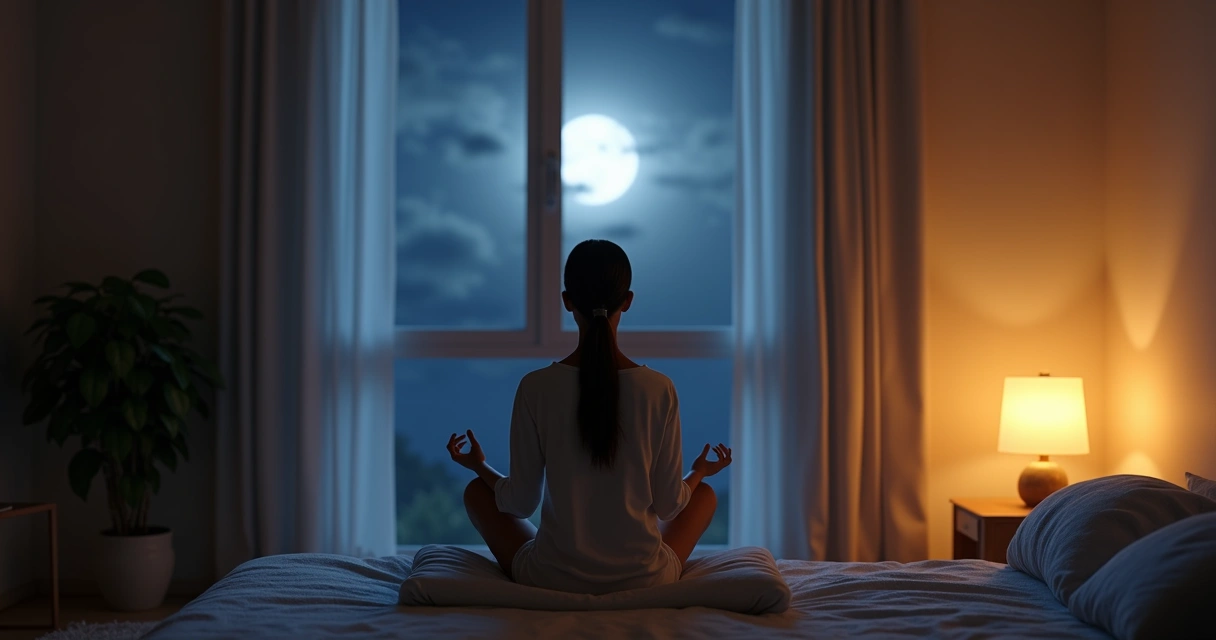
A brief body practice can be enough. We can sit on the bed or on a chair, place both feet on the floor, and breathe slowly. Then scan the body from face to chest to stomach to legs. No need to fix anything. Just notice.
If there is tension, we can exhale longer than we inhale. If there is agitation, we can place one hand on the chest and one on the abdomen. If there is sadness, we can allow it to be felt without a story.
Short. Quiet. Real.
The body tells the truth first.
Choose one closing intention
The day should not end in mental clutter. A final intention helps gather the inner state. This is not a goal for tomorrow. It is a sentence that gives shape to the night.
We may choose something like this:
Tonight I release what is not mine to carry.
Tonight I rest without replaying the day.
Tonight I allow silence to restore me.
This last step is subtle, but strong. It directs attention away from scattered thought and toward conscious rest.
What gets in the way
Many people say they do not have time for nightly rituals. We understand that reaction. But often the issue is not time. It is inner resistance. Silence can feel demanding because it removes distraction. We may meet regret, loneliness, or unfinished emotion.
That is why gentleness matters. We do not need a perfect practice. We need one we can return to. Even ten minutes can shift the quality of a night.
Another barrier is expecting instant calm. Some evenings bring peace. Others bring discomfort first. This does not mean the ritual failed. It may mean awareness is finally catching up with the day.
Making it part of real life
The best ritual is the one that can live inside ordinary evenings. It should fit the life we have now, not the life we imagine in ideal conditions. We can begin with a short form and let it grow later.
One possible structure looks like this:
Five minutes of low light and no screens.
Five minutes of journaling or quiet review.
Three minutes of breathing and body awareness.
One closing sentence before sleep.
That is enough to begin. In our experience, repetition matters more than length. A small ritual done nightly forms a deeper path than a long ritual done once in a while.
Conclusion
To end the day with expanded awareness is to stop living on automatic pilot. It is to close the day with honesty, calm, and a little more consciousness than we had in the morning. Nightly rituals do not erase pain or confusion, but they help us meet both with more maturity.
We think the evening can become a sacred kind of simplicity. A lamp turned low. A breath noticed. A feeling named. A page written. Then sleep arrives, not as escape, but as rest.
When we end the day awake to ourselves, we begin the next day less divided.
Frequently asked questions
What are end-of-day awareness rituals?
End-of-day awareness rituals are simple evening practices that help us slow down, reflect, and enter sleep with more clarity. They may include quiet time, journaling, breathing, body awareness, or a short intention for the night.
How to start a nightly awareness practice?
We can start small. Turn off screens a little earlier, sit in silence for a few minutes, and write down one feeling or one lesson from the day. A short practice is easier to keep, and consistency builds depth over time.
What are the benefits of these rituals?
These rituals can help us process emotions, reduce mental noise, notice behavior patterns, and sleep with a calmer inner state. They also support self-knowledge because they create a regular space for honest reflection.
How much time do these rituals take?
They can take as little as 10 to 15 minutes. Some people prefer longer evening practices, but even a brief ritual can create a meaningful shift when done with presence and regularity.
Can beginners try expanded awareness rituals?
Yes. Beginners can begin with very simple steps, such as dimming the lights, taking a few slow breaths, and writing a short note about the day. Expanded awareness grows through practice, not through previous experience.